

Menopause-related skin changes are driven by a significant drop in estrogen, which accelerates collagen loss and reduces skin elasticity. You can treat these changes without surgery in Glenwood Springs by combining collagen-stimulating technologies with targeted injectables. This guide covers how to manage hormonal shifts and restore facial structure using advanced, non-invasive treatments at Contour Body Aesthetics.
Understanding Menopause Skin Changes
Menopause is a natural biological transition that profoundly affects the skin's structural integrity. Estrogen plays a critical role in maintaining collagen density, skin thickness, and hydration levels. When estrogen levels decline, the skin often becomes thinner, drier, and less elastic. This process is not just about aging; it is a specific hormonal shift that changes how your skin behaves and ages.
Many women in the Roaring Fork Valley notice that their skin loses its firmness much faster during perimenopause and menopause than it did in their thirties. The loss of collagen leads to a loss of volume, which can result in sagging jowls, a less defined jawline, and crepey texture on the neck and body. Understanding this mechanism is the first step in choosing the right treatment. It is not enough to simply moisturize; the skin needs structural support to maintain its shape.
Menopause Hormone Therapy
Menopause hormone therapy (MHT) is a medical approach designed to replace the hormones that the body no longer produces in sufficient quantities. While MHT is primarily a medical treatment for managing systemic symptoms like hot flashes and mood changes, it also has significant implications for skin health. Estrogen helps maintain the dermal matrix, and restoring these levels can slow the rate of collagen degradation.
The Role of Estrogen in Skin Structure
Estrogen is a key regulator of collagen synthesis. It stimulates fibroblasts, the cells responsible for producing collagen and elastin. When estrogen levels drop, fibroblast activity decreases, leading to a net loss of collagen over time. For many women, MHT can help preserve the remaining collagen and improve skin hydration. However, MHT is a medical decision that must be made with a healthcare provider based on individual health history and risk factors.
Complementing Medical Care with Aesthetics
While MHT addresses the hormonal root of the issue, it does not reverse existing structural damage. If you have already lost significant collagen or experienced weight changes, MHT alone may not restore facial volume or tighten loose skin. This is where aesthetic treatments come in. At Contour Body Aesthetics, we view MHT and aesthetic care as complementary. MHT helps maintain the skin's baseline health, while non-surgical treatments address the visible signs of structural loss. We encourage our clients to discuss their hormonal health with their primary care provider or gynecologist while we focus on the external appearance and structural rejuvenation.
Collagen Stimulating Injectables
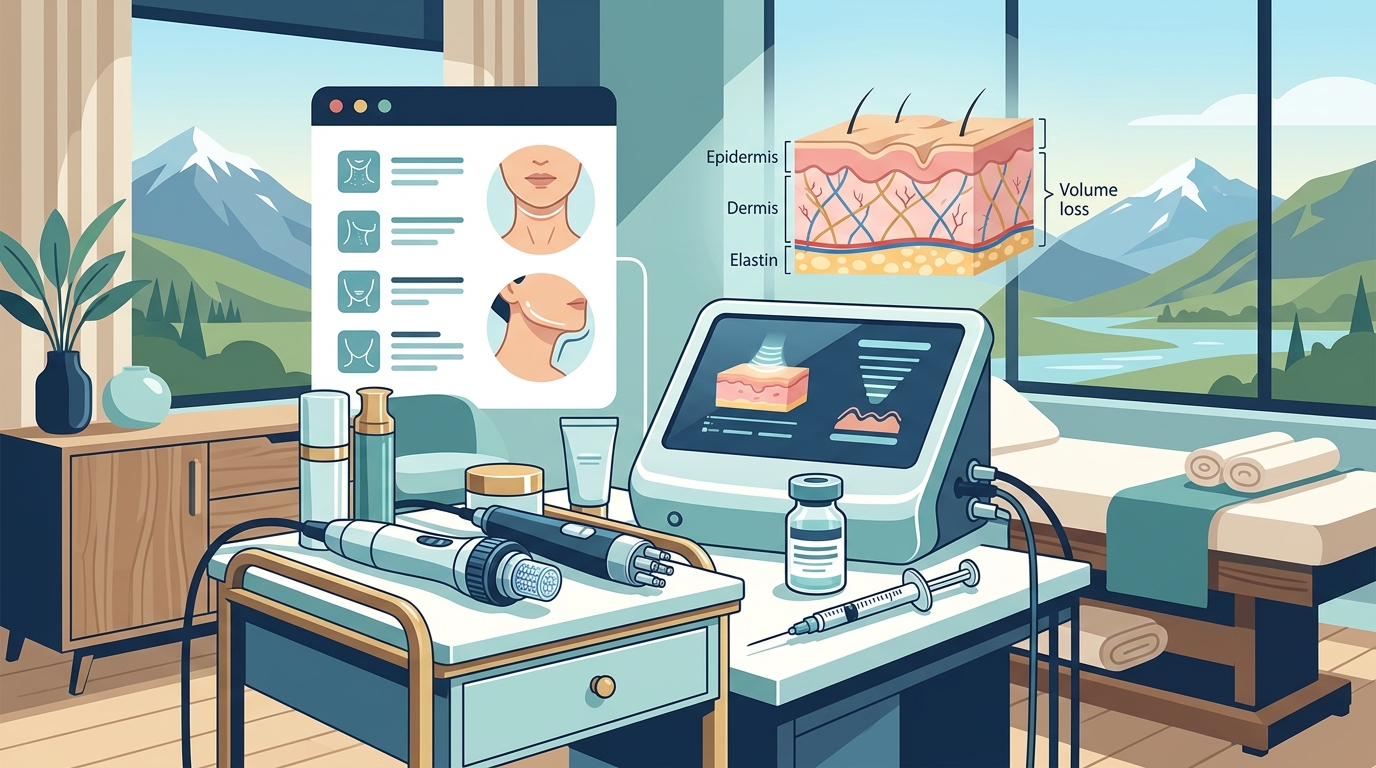
Collagen stimulating injectables are a category of treatments designed to trigger the body's natural repair mechanisms. Unlike traditional fillers that simply add volume, these treatments work by creating controlled micro-injuries or delivering biostimulatory agents that encourage the production of new collagen and elastin. This approach is particularly effective for menopause-related skin changes because it addresses the root cause of laxity: the loss of structural support.
How Biostimulators Work
Biostimulatory injectables, such as those containing calcium hydroxylapatite or poly-L-lactic acid, work by stimulating fibroblasts to produce new collagen over time. The results are gradual, typically becoming visible over several months as the new collagen network forms. This gradual improvement is often preferred by clients who want a natural-looking result rather than an immediate, dramatic change. The new collagen helps to firm the skin and improve its overall texture and resilience.
Targeting Specific Areas of Concern
Menopause-related changes often affect specific areas of the face and body. The lower face, including the jowls and jawline, is a common area where volume loss and laxity become noticeable. Injectables can be strategically placed to support these areas while stimulating collagen production. For the neck and décolletage, where skin often becomes crepey, biostimulators can help improve firmness and smoothness. At Contour Body Aesthetics, we customize the placement and type of injectable based on your specific concerns and goals.
Advanced Structural Rejuvenation
While injectables are powerful, they are often part of a broader strategy for structural rejuvenation. Non-surgical technologies that stimulate collagen and tighten skin are essential for addressing the laxity that comes with menopause. These treatments work by delivering energy to the deeper layers of the skin, where collagen production occurs. This approach is non-invasive, meaning there is no surgery, no anesthesia, and minimal to no downtime.
Radiofrequency and Collagen Remodeling
Radiofrequency (RF) treatments, such as XERF, are designed to heat the deeper layers of the skin safely. This heat triggers an immediate contraction of existing collagen and stimulates the production of new collagen over time. The result is firmer, tighter skin with improved texture. XERF is particularly effective for larger areas like the abdomen, arms, and thighs, where skin laxity is common after weight changes or aging. It is a versatile tool that can be used on the face and body to address multiple concerns at once.
Muscle Stimulation for Facial Lifting
Facial sagging is not just about skin laxity; it is also about the weakening of the underlying muscles. EMFACE is a non-invasive treatment that uses radiofrequency and electrical muscle stimulation to strengthen facial muscles. By building muscle tone, EMFACE can create a natural-looking lift without surgery. This is especially beneficial for the brow, jawline, and neck. Strengthening these muscles helps to support the skin and improve facial definition, counteracting the effects of muscle atrophy that can occur with aging and hormonal changes.
Building a Customized Plan
There is no one-size-fits-all approach to treating menopause-related skin changes. The best results come from a personalized plan that addresses your specific concerns, goals, and lifestyle. At Contour Body Aesthetics, we begin with a comprehensive consultation to assess your skin quality, structural changes, and aesthetic goals. This allows us to create a treatment plan that combines the most effective modalities for your unique situation.
The Consultation Process
During your consultation, we will discuss your medical history, including any hormone therapy you may be using. We will evaluate the areas of your face and body that are most affected by menopause-related changes. Based on this assessment, we will recommend a combination of treatments, such as RF skin tightening, muscle stimulation, and collagen-stimulating injectables. We will also discuss realistic expectations and timelines for results. Our goal is to help you look and feel like the best version of yourself, with natural-looking results that enhance your features.
Long-Term Maintenance
Menopause is a long-term phase of life, and skin changes can continue to evolve. A customized plan should include a strategy for long-term maintenance. This may involve periodic treatments to maintain collagen levels and skin firmness. By staying proactive, you can continue to enjoy the benefits of your treatments and maintain a youthful, confident appearance. We work with our clients to develop a sustainable plan that fits their lifestyle and budget.
Key Takeaways
- Menopause-related skin changes are driven by estrogen decline, leading to collagen loss and reduced elasticity.
- Menopause hormone therapy (MHT) can help preserve skin health but does not reverse existing structural damage.
- Collagen-stimulating injectables trigger the body's natural repair mechanisms to produce new collagen and elastin.
- Radiofrequency treatments like XERF heat deeper skin layers to tighten skin and stimulate collagen remodeling.
- EMFACE strengthens facial muscles to create a natural-looking lift without surgery.
- A customized treatment plan is essential for addressing individual concerns and achieving natural-looking results.
- Long-term maintenance is key to sustaining the benefits of non-surgical treatments during menopause.
Frequently Asked Questions
Can hormone therapy reverse skin laxity?
Hormone therapy can help slow the rate of collagen loss and improve skin hydration, but it cannot reverse existing structural damage or laxity. For visible improvements in skin firmness and volume, non-surgical aesthetic treatments are often necessary.
How long do results from collagen-stimulating injectables last?
Results from collagen-stimulating injectables are gradual and can last for several months to over a year, depending on the specific product and individual response. Maintenance treatments are typically recommended to sustain the results.
Is EMFACE safe for women going through menopause?
Yes, EMFACE is a non-invasive treatment that is generally safe for women of all ages, including those going through menopause. It works by stimulating facial muscles, which can help counteract the effects of muscle atrophy associated with aging and hormonal changes.
Can I combine MHT with aesthetic treatments?
Yes, MHT and aesthetic treatments are complementary. MHT helps maintain the skin's baseline health, while aesthetic treatments address visible signs of structural loss. It is important to coordinate with your healthcare provider and aesthetic provider to ensure a cohesive approach.
What areas of the body are most affected by menopause-related skin changes?
The face, particularly the lower face and neck, is often the most noticeable area. However, skin laxity can also affect the arms, abdomen, and thighs. A comprehensive assessment can help identify all areas that may benefit from treatment.
How many treatments are needed for optimal results?
The number of treatments needed varies depending on the specific modality and individual response. For example, RF treatments may require a series of sessions, while injectables may be administered in a single session or over several months. Your provider will recommend a personalized plan based on your goals.
Conclusion
Treating menopause-related skin changes without surgery is entirely possible with the right combination of medical and aesthetic approaches. By understanding the role of hormones in skin health and leveraging advanced technologies like RF skin tightening and muscle stimulation, you can restore your confidence and achieve a natural-looking rejuvenation. At Contour Body Aesthetics in Glenwood Springs, we are dedicated to providing personalized, non-surgical solutions for women navigating this transition. We invite you to book a consultation to explore how we can help you look and feel like the best version of yourself.