Yes, laser resurfacing can tighten loose skin by stimulating collagen production and remodeling the dermis. This non-surgical approach is particularly effective for mild to moderate skin laxity, offering a way to improve firmness without the downtime associated with a facelift. At Contour Body Aesthetics in Glenwood Springs, we utilize advanced laser technologies to help clients in the Roaring Fork Valley achieve a more youthful, structured appearance.
The Science of Laser-Induced Collagen Remodeling
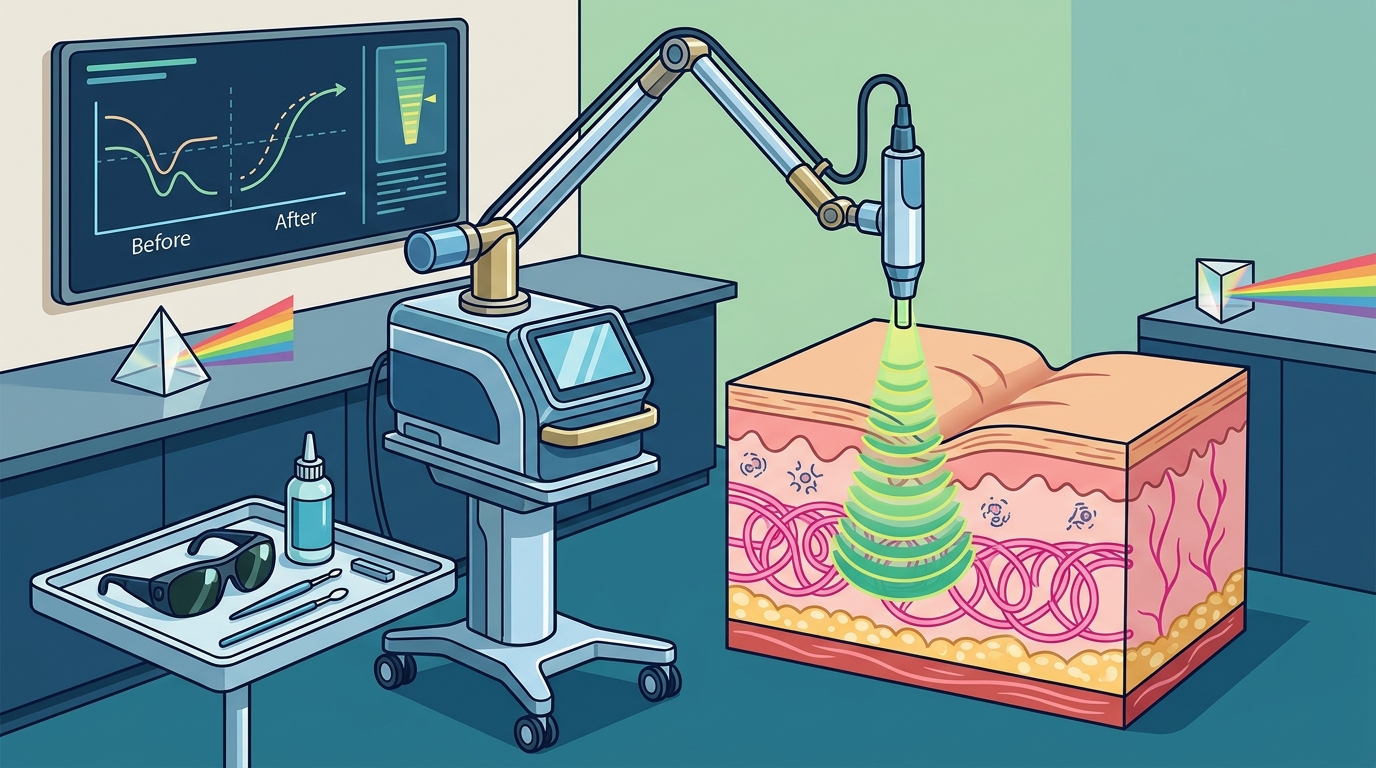
Laser resurfacing is a procedure that uses controlled thermal energy to target the deeper layers of the skin. When the laser energy is absorbed by the tissue, it triggers a biological healing response. This process, known as neocollagenesis, encourages the body to produce new, tighter collagen fibers. Over several months, these new fibers replace older, weakened ones, resulting in firmer and smoother skin.
The effectiveness of this treatment depends on the depth of the laser penetration. Ablative lasers remove the outer layer of skin to reach the dermis, while non-ablative lasers deliver energy beneath the surface without removing tissue. Both methods aim to heat the collagen to a specific temperature that causes immediate contraction and long-term remodeling. For clients in Glenwood Springs and Aspen, understanding this mechanism is key to setting realistic expectations for skin tightening.
Ablative vs. Non-Ablative: Choosing the Right Approach
There are two primary categories of laser resurfacing: ablative and non-ablative. Ablative lasers, such as CO2 and Erbium YAG, vaporize the top layers of the skin. This method is highly effective for deep wrinkles and significant laxity but requires a longer recovery period. Non-ablative lasers, on the other hand, leave the skin surface intact while heating the underlying tissue. This option is often preferred by clients who need to return to work or social activities quickly.
At Contour Body Aesthetics, we evaluate each client's skin type and concerns to determine the best laser modality. For those seeking structural rejuvenation without extensive downtime, non-ablative options are often the ideal starting point. The choice between these two types depends on the severity of the laxity and the client's lifestyle. A consultation allows our specialists to recommend the most appropriate technology for your specific goals.
Managing Expectations for Skin Laxity
While laser resurfacing is a powerful tool, it is not a substitute for surgery in cases of severe skin sagging. The degree of tightening achieved through laser therapy is generally modest to moderate. Clients with significant jowls or neck laxity may find that laser treatments provide a helpful improvement but may not achieve the dramatic lift of a facelift. It is essential to have a realistic understanding of what the treatment can and cannot do.
Many patients see gradual improvements over three to six months as the collagen remodeling process continues. The results are cumulative, and a series of treatments often yields better outcomes than a single session. For residents of the Roaring Fork Valley, this gradual approach allows for a natural-looking enhancement that complements their unique facial structure. We emphasize that results vary based on individual skin biology and aging patterns.
Integrating Lasers with Other Structural Treatments
Laser resurfacing is often most effective when combined with other non-surgical treatments. For example, pairing laser therapy with radiofrequency treatments like XERF can address both surface texture and deeper structural support. XERF delivers energy to the deeper layers of the skin to stimulate collagen, while lasers focus on the epidermis and upper dermis. This combination approach provides a more comprehensive solution for skin laxity.
At Contour Body Aesthetics, we design personalized treatment plans that may include a mix of lasers, radiofrequency, and injectables. This multi-modal strategy ensures that all layers of the skin are addressed, leading to a more balanced and youthful appearance. By integrating different technologies, we can help clients in Glenwood Springs achieve the structural rejuvenation they seek without undergoing surgery.
Key Takeaways
- Laser resurfacing tightens skin by stimulating new collagen production.
- Non-ablative lasers offer a good balance of results and minimal downtime.
- Ablative lasers provide more dramatic results but require longer recovery.
- Laser therapy is best suited for mild to moderate skin laxity.
- Combining lasers with radiofrequency treatments can enhance overall results.
- Consultation is essential to determine the best laser modality for your skin.
Frequently Asked Questions
How long does it take to see results from laser resurfacing?
Initial improvements may be visible immediately after the treatment, but the full effects of collagen remodeling typically develop over three to six months. The skin continues to tighten and improve in texture during this period.
Is laser resurfacing painful?
Most clients experience a warm or tingling sensation during the procedure. Topical numbing creams are often used to ensure comfort. The level of discomfort varies depending on the type of laser and the treatment area.
Can laser resurfacing replace a facelift?
Laser resurfacing is not a direct replacement for a facelift in cases of severe sagging. However, it is an excellent non-surgical option for mild to moderate laxity, offering a way to improve skin firmness without surgery.
How many sessions are needed for skin tightening?
The number of sessions depends on the individual's skin condition and goals. Many clients undergo a series of treatments spaced several weeks apart to achieve optimal results. Your provider will recommend a personalized plan during your consultation.
Is laser resurfacing safe for all skin types?
Modern laser technologies are safe for a wide range of skin types. However, it is important to consult with a qualified provider to ensure the laser settings are appropriate for your specific skin tone and history.